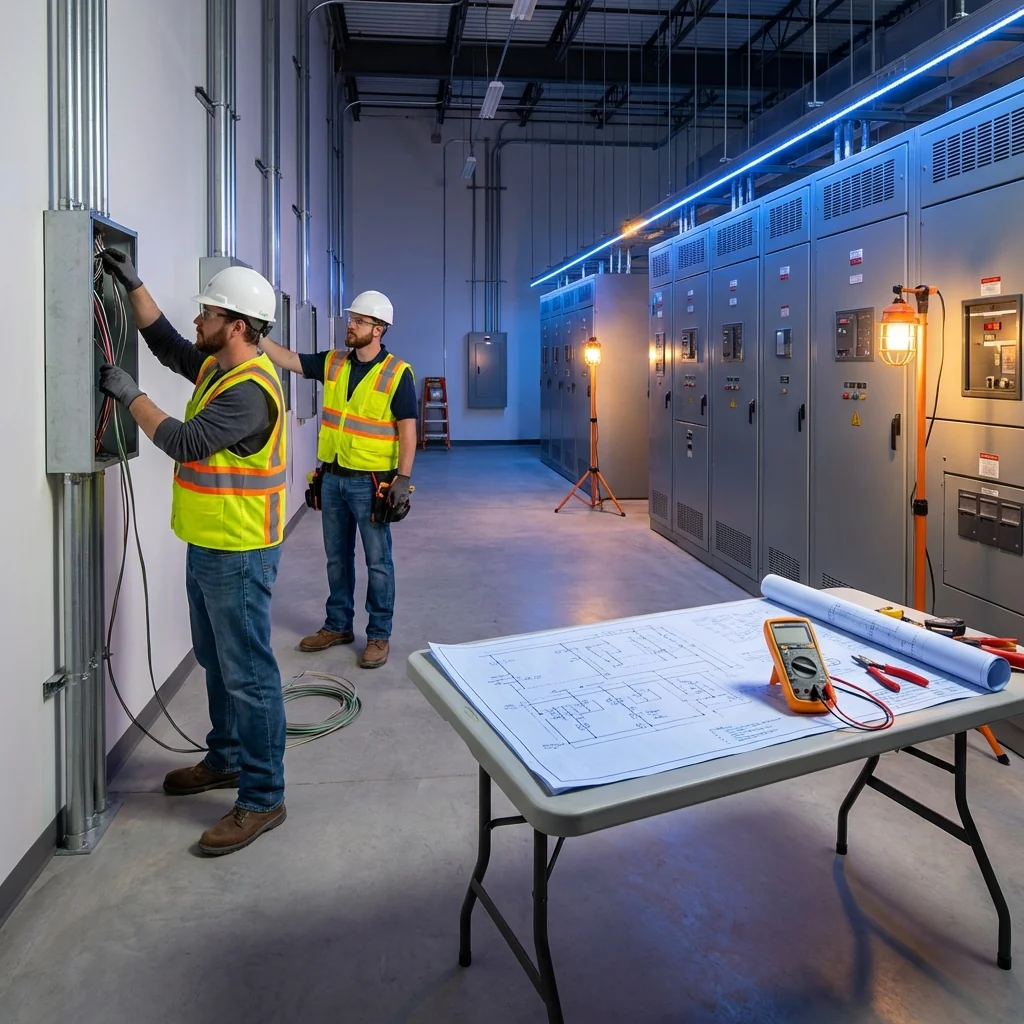
Electrical Estimating and Takeoff Services
Precise CSI Division 16 electrical takeoffs covering conduit, wire, panels, switchgear, lighting, and low voltage systems. Delivered in 24 to 48 hours.
Content Reviewed by: Our Senior Estimating Team, featuring professionals with 15+ years of experience in commercial, industrial, and residential electrical construction.
Last Updated: August 2026
Electrical Estimating Services for Contractors and Developers
Electrical bids fail when labor hours are underestimated on conduit runs or when lighting fixture counts are pulled from a schedule rather than verified against the reflected ceiling plan. The Virtual Estimation provides professional electrical estimating and takeoff services for electrical contractors, general contractors, MEP contractors, builders, and commercial developers across the USA and Canada.
Our estimators produce precise electrical material takeoffs, quantity takeoffs, and labor estimates directly from your electrical drawings. We cover power distribution, lighting, and low voltage systems. We price every cost estimate and bid estimate to current NECA labor unit data and regional material rates, delivering a complete CSI Division 16 electrical estimate in 24 to 48 hours.
Comprehensive Electrical Takeoff Services
A winning bid starts with a flawless electrical takeoff. We thoroughly analyze drawings, specifications, and schedules to measure every component required for the project. From conduit and wire to panels, switchboards, and specialty fittings, our electrical takeoff services cover everything needed to generate an accurate bid.
Electrical Material Takeoff
We extract precise material quantities from drawings, including conduit, wire, cable, fittings, boxes, supports, and lighting fixtures. Every item is quantified based on the routing and site conditions, not just a standard multiplier.
Power Distribution Estimating
Accurate estimating for service entrance, main distribution, switchgear, switchboards, panels, feeders, transformers, MCCs, VFDs, bus duct, cable tray, generators, and emergency power systems.
Lighting Estimating
Thorough coverage of interior and exterior lighting, emergency lighting, exit signs, and lighting controls (dimmers, occupancy sensors, photocells). We meticulously review fixture schedules and reflected ceiling plans.
Who We Serve
- Electrical Subcontractors: Outsource your takeoffs so your in-house team can focus on bid strategy, vendor quoting, and client relationships rather than spending days tracing conduit runs on plan sheets.
- General Contractors: Get independent electrical cost verification before accepting sub bids, or estimate self-perform electrical scopes for smaller GC projects and change orders.
- MEP Contractors and Design-Build Teams: Combined mechanical, electrical, and plumbing estimates organized by system and coordinated across trades for design-build and integrated project delivery.
- Commercial Developers and Owners: Independent electrical budget estimates at feasibility and design stages to validate contractor pricing and support project financing applications.
- Instrumentation and Low Voltage Contractors: Specialized takeoffs for fire alarm, security, communications, data, AV, and building automation systems alongside or separate from power and lighting estimates.
Electrical Project Types We Estimate
Residential Electrical Estimating
Complete electrical takeoffs for single-family homes, townhomes, multifamily buildings, and apartment complexes. We estimate service entrance and panel sizing, branch circuit wiring, outlet and switch counts, lighting fixture quantities by room and type, kitchen and bathroom circuit requirements, EV charging rough-in, smart home system wiring, and exterior lighting. Labor hours estimated by room and circuit type using NECA labor unit data.
Commercial Electrical Estimating
Commercial electrical estimates for office buildings, retail centers, healthcare facilities, schools, hospitality, and mixed-use developments. We scope distribution panels and switchgear, power distribution to mechanical equipment, lighting layouts by zone, emergency and exit lighting, receptacle and data outlet quantities, tenant electrical for TI projects, and code-required arc fault and ground fault protection. Estimates organized by floor, zone, and system for phased commercial projects.
Industrial Electrical Estimating
Industrial electrical estimates for manufacturing plants, warehouses, distribution centers, and process facilities. We estimate motor control centers, variable frequency drives, transformer sizing and installation, bus duct and cable tray quantities, disconnect and safety switch counts, equipment connection schedules, and emergency power systems. Heavy industrial conduit runs estimated by type (rigid, IMC, EMT, PVC) with appropriate labor productivity rates per conduit size and material.
Low Voltage and Specialty Systems
Separate or combined low voltage estimates for fire alarm systems, security and access control, CCTV surveillance, structured cabling and data networks, audio visual systems, nurse call, distributed antenna systems, and building automation controls. Each system estimated independently per its applicable specification section and CSI Division 27, 28, or Division 16 subdivision as required by your bid format.
CSI Division 16 Scope Coverage
All electrical estimates are organized per CSI MasterFormat Division 16 (Electrical) and updated MasterFormat Divisions 26, 27, and 28:
| CSI Division | Scope | What We Quantify | Key Variable |
|---|---|---|---|
| 16 10 00 / 26 10 | Service and Distribution | Service entrance (EA), switchgear (EA), panels (EA), feeders (LF, AWG) | Service voltage and amperage drive cost significantly |
| 16 12 00 / 26 12 | Medium Voltage Distribution | Switchgear, transformers, primary feeders (LF) | Primary vs secondary distribution cost ratio |
| 16 20 00 / 26 20 | Lighting | Fixtures (EA by type), switching (EA), dimmers (EA), controls (EA) | Fixture type and mounting height affect labor hours |
| 16 22 00 / 26 22 | Motors and Controls | Disconnects (EA), MCC (EA), VFDs (EA), starters (EA) | HP rating and NEMA enclosure type drive cost |
| 16 50 00 / 26 50 | Lighting Equipment | Exit signs (EA), emergency fixtures (EA), battery packs (EA) | Code-required quantities by occupancy type |
| 16 70 00 / 26 70 | Raceway and Wiring | Conduit by type and size (LF), wire by size (MF), boxes (EA) | Largest labor component, 40 to 60% of total hours |
| 27 00 00 | Communications | Data outlets (EA), cable (LF), patch panels (EA), racks (EA) | Structured cabling standards (TIA-568) |
| 28 10 00 | Fire Alarm | Devices (EA), initiating circuits (LF), control panels (EA) | NFPA 72 compliance requirements by occupancy |
| 28 20 00 | Security and Access | Cameras (EA), access readers (EA), cable (LF), head-end (EA) | Conduit or plenum cable installation method |
NECA Labor Units: How We Price Electrical Labor
Electrical labor is the largest cost variable in most estimates. We use NECA (National Electrical Contractors Association) labor unit manual data as the foundation for every electrical labor calculation. NECA labor units express the man-hours required per unit of installation for each work type, adjusted for project-specific difficulty factors. Here are representative reference values our estimators apply:
| Work Type | Unit | Labor Hours | Key Labor Driver |
|---|---|---|---|
| EMT conduit, 1/2 inch | 100 LF | 2.5 to 3.5 hrs | Height of installation, obstructions, bends per run |
| EMT conduit, 2 inch | 100 LF | 5.5 to 7.0 hrs | Larger conduit requires heavier tools and more installers |
| Rigid steel conduit, 2 inch | 100 LF | 9.0 to 12.0 hrs | Threading and heavier weight vs EMT |
| THHN wire, 12 AWG | 1,000 LF | 1.5 to 2.0 hrs | Pulling length and number of conductors in conduit |
| THHN wire, 2/0 AWG | 1,000 LF | 4.0 to 6.0 hrs | Weight and pulling tension for large conductors |
| 200A panel, surface mount | Each | 6.0 to 10.0 hrs | Feeder size, number of circuits, location |
| Recessed lighting fixture | Each | 0.8 to 1.5 hrs | Ceiling type, trim type, dimming connection |
| Duplex receptacle | Each | 0.6 to 1.0 hr | Box rough-in vs finish trim, AFCI or GFCI requirement |
| Fire alarm device (smoke, pull, horn) | Each | 0.8 to 1.5 hrs | Device type, ceiling height, addressable vs conventional |
NECA units are adjusted upward by 10 to 30% for difficult conditions including exposed structure, occupied space, high ceilings over 14 feet, and tight commercial build-outs. We apply condition factors specific to your project type in every estimate.
What Is Included in Your Electrical Estimate
Our Electrical Estimating Process
Drawing Review and System Identification
We review your complete electrical drawing package including power plans, lighting plans, one-line diagram, panel schedules, fixture schedule, riser diagram, and specifications. We identify all systems in scope and flag any specification sections with unusual requirements before beginning the takeoff.
Conduit and Raceway Takeoff
All conduit is measured from the electrical plans by type and size using PlanSwift digital takeoff. Conduit routes are traced from source to load for each circuit and system, with fittings, boxes, and supports counted per trade practice.
Wire and Device Takeoff
Wire quantities are derived from conduit lengths and circuit arrangements. Fixture and device counts are taken from reflected ceiling plans, power plans, and device schedules, cross-referenced for consistency.
Panel Schedule and Equipment Review
Panel schedules and the one-line diagram are reviewed to verify service size, feeder sizing, and equipment connections. Major equipment items are identified for vendor quote requests.
NECA Labor Hour Application
NECA labor units are applied to all takeoff quantities by work type, with condition factors for project-specific difficulty. Labor hours are organized by craft (journeyman vs apprentice ratio) per your company labor model.
Pricing, QC Review, and Delivery
All quantities are priced with current material costs and NECA labor rates for your local IBEW or open shop market. A senior estimator independently verifies all major quantities before delivery. Your complete estimate is delivered within 24 to 48 hours.
Tools and Standards
| Tool or Standard | Application |
|---|---|
| PlanSwift and Bluebeam Revu | Digital takeoff: conduit LF, fixture EA, device EA, wire MF from PDF and CAD drawings |
| NECA Labor Unit Manual | Industry-standard electrical labor hours per unit of installation by work type and material |
| RS Means Electrical Cost Data | Regional material and equipment pricing updated quarterly |
| CSI MasterFormat Div 16, 26, 27, 28 | Estimate organization and scope classification framework |
| NFPA 70 (National Electrical Code) | Code compliance reference for circuit sizing, protection requirements, and occupancy rules |
| NFPA 72 (Fire Alarm Code) | Fire alarm device placement and circuit requirements reference for scope verification |
| TIA-568 Structured Cabling Standard | Low voltage cable routing and termination standards reference |
| IBEW and Open Shop Labor Rates | Union and non-union hourly rates applied based on your project location and labor model |
Pricing and Turnaround
Electrical estimating fees are based on project size, system complexity, and required turnaround:
| Project Type | Fee Range | Turnaround | Rush |
|---|---|---|---|
| Residential single-family (new build) | $200 to $450 | 24 hrs | Same-day |
| Residential multifamily (2 to 20 units) | $400 to $900 | 24 to 48 hrs | Yes |
| Commercial TI or small fit-out (under 10,000 SF) | $300 to $700 | 24 to 48 hrs | Yes |
| Commercial new construction (10,000 to 50,000 SF) | $600 to $1,500 | 48 hrs | Case by case |
| Industrial or large commercial (50,000+ SF) | $1,000 to $3,000+ | 48 to 72 hrs | Case by case |
| Low voltage systems only (fire alarm, data, security) | $200 to $600 | 24 to 48 hrs | Yes |
| Change order estimate (single circuit or scope item) | $100 to $300 | 24 hrs | Same-day |
First-time clients receive 30% off. Volume pricing available for electrical contractors with recurring bid volume.
Why The Virtual Estimation for Electrical
-
NECA Labor Unit Foundation: Every labor calculation is based on NECA labor unit data, the same standard used by professional electrical estimators and IBEW labor agreements, not rule-of-thumb percentages or generic construction labor databases.
-
Conduit and Wire Measured from Plans: We do not estimate wire quantities from panel circuit counts. Every conduit run is traced and measured from your drawings, giving you a quantity you can verify and trust on bid day.
-
Low Voltage Included as Standard: Fire alarm, data, and security system quantities are included in your estimate when drawings are provided, not charged as add-ons. Most competitors exclude or price low voltage separately.
-
CSI Division 16, 26, 27 and 28 Organization: Your estimate is structured per current CSI MasterFormat, compatible with GC bid formats, public bid schedules, and owner budgets across all delivery methods.
-
IBEW and Open Shop Pricing Available: We can price your estimate to union IBEW rates or open shop rates depending on your labor market and project requirements. Specify at the time of submission.
-
No Contracts Required: Submit one project or a full season of bids. No retainers, no subscriptions, no minimums.
Frequently Asked Questions
Electrical estimating is the process of calculating the complete cost of installing electrical systems in a building or facility. A complete electrical estimate covers conduit and raceway, wire and cable, distribution panels and switchgear, lighting fixtures and controls, devices and outlets, motor connections, emergency and exit lighting, low voltage systems including fire alarm, data, and security, and all associated labor. Accurate electrical estimating requires measuring conduit runs from drawings, applying NECA labor units to each work type, and using current material pricing for your local market.
NECA labor units are published by the National Electrical Contractors Association and define the number of man-hours required to install one unit of a given electrical component under standard conditions. For example, a NECA labor unit for 1/2 inch EMT conduit might be 2.8 man-hours per 100 linear feet. These units are the industry standard for professional electrical estimating and are used by electrical contractors and IBEW collective bargaining agreements nationwide. Using NECA-based labor hours produces an estimate that reflects actual field productivity rather than guesses or percentages, and creates a number your project manager can verify against historical job cost data.
Yes. Low voltage systems including fire alarm, security and access control, CCTV, structured data cabling, audio visual, and building automation are included in our electrical estimates when your drawings and specifications include them. We estimate each low voltage system per its applicable CSI division and specification section. Low voltage can be estimated alongside the power and lighting package or as a standalone estimate depending on your scope and bid requirements.
A power estimate covers only the distribution, branch circuiting, and equipment connections in the power system. A full electrical estimate includes power, lighting and lighting controls, emergency systems, and all low voltage systems within the electrical contractor scope. We can deliver either depending on your project scope. If your bid form breaks out lighting from power, or separates low voltage from electrical, we organize our deliverable to match your bid format exactly.
Conduit is measured directly from your electrical plans in linear feet by type and size. Wire quantities are calculated from conduit lengths using the circuit arrangements shown on the panel schedules and one-line diagram. We do not estimate wire from circuit counts alone because conduit routing affects actual wire length significantly. All wire quantities include a standard pulling waste factor per trade practice, and large conductor pulls include a tension allowance for long runs.
Yes, at the budget or schematic design stage. With a single-line diagram, preliminary panel schedule, space plan, and lighting concept, we can produce a conceptual electrical budget with a clearly labeled basis of estimate. Budget-level estimates are appropriate for feasibility analysis, preliminary financing, and early design cost tracking. We label all assumptions and note the design stage so you understand the uncertainty range built into the number.
Yes. Conduit fittings including couplings, connectors, elbows, and LB bodies are calculated as a percentage of conduit quantities per trade practice. Junction boxes and pull boxes are counted from the plans. Hanger and support quantities are calculated based on conduit type and support spacing requirements per NEC Article 358 or the applicable article. All accessories are included in the material cost line items.
For residential new construction and single-floor commercial TI projects: 24 hours from plan receipt. For multi-story commercial projects: 24 to 48 hours. For large industrial or complex commercial projects: 48 to 72 hours. Low voltage-only estimates: 24 hours. Change order estimates: typically same day or within 24 hours. Same-day rush is available for residential and smaller commercial projects when plans are received before noon ET. Contact us before submitting to confirm availability for urgent deadlines.
Get Your Electrical Estimate, Free Quote, 24 to 48 Hour Delivery
Send us your electrical drawings and receive a complete CSI Division 16 estimate with NECA labor hours in 24 to 48 hours. First-time clients save 30%.
Questions about NECA labor units, low voltage scope, or IBEW vs open shop pricing? We respond within 2 business hours.